
Between Life and What Comes Next | GRIM
A conversation between GRIM’s writers (Joey Orton, Brad Silnutzer, Petro AP and Scott Hoying), director Sammi Canold, and Director of Artistic Development Gabriel Greene
GG: Joey, the origin story for GRIM begins with you. How did the idea for this musical take shape?
JO: It has a sad origin story. My mom has Alzheimer’s, and I was visiting her and walking around my childhood home. And just, like, in an instant the basic idea of the story popped into my head: the Grim Reaper’s daughter has to take over as the next Grim Reaper. It just kind of came like that. And immediately I thought, “I like this one.” My first calls were to Brad and Petro.
BS: The three of us didn’t know how to write a musical, so we wrote a practice musical to learn how to write a musical, which was a full-length, unauthorized The Fast and the Furious musical parody.
PAP: Just like GRIM, that show is about family.
SH: I’ll never forget sitting in that theatre and laughing so hard I couldn’t breathe. I’d written pop songs with Joey and Petro, so I knew they could write a hook, but I didn’t know they could do that – build a whole story and make a room lose its mind.
I was basically a fan cornering them at the stage door, begging to write with them. Then the pandemic hit and we started writing these little comedy songs on Zoom for my socials, and at some point it was like, “Wait, we’re already a writing team. We might as well start chipping away at a bigger thing.”
JO: Yeah, a musical is just 10,000 TikToks, so… [laughter] It was the pandemic, we just started writing GRIM on Zoom.
PAP: For a long time, it was just four people on Zoom saying, “Wait, you’re muted.” It’s amazing a musical came out of it at all.
JO: How do you eat an elephant? Bite by bite. We just kept pushing forward every day.
GG: One of the joys of GRIM is how thoroughly and carefully you’ve built the world of limbo, where all the reapers live. How did that original one-sentence idea grow into the show you have now?
JO: First of all, we love Pixar movies. We love big, world-building things.
BS: I’m gonna be honest, Joey and I have the reading sensibilities of teenage girls. We love YA [Young Adult] books. We like these big, crazy books that spend hundreds of pages building a world.
PAP: I think we’re less interested in Lord of the Rings world-building and more interested in McDonald’s world-building. McDonald’s has its own architecture, uniforms, language, characters, mythology. You can drop somebody into one anywhere on Earth and they immediately understand the world they’re in. Bringing that mundanity to something fantastical like limbo grounds it.
JO: We had a lot of ideas for the world of GRIM. We liked [setting it in] limbo, the space between life and what comes next, because we didn’t want to say, “This is the answer to heaven and hell.” It leaves room for a lot of interpretations. Then Brad had the idea of an entire world of reapers for every type of loss.
BS: We realized pretty early on that this was essentially a comedy about loss, and so the idea of exploring all different types of loss rather than just the big one at the end seemed really rich to us. We had a general outline of what we thought the show could be, but we also had this master document of every type of human loss that we could potentially come up with that could be represented by a reaper. It was everything from ones that you see in the show to, like, really small, inane things. And then we had to choose which ones would be on the Council of Deaths – what are the most significant losses that shape us as human beings? Those were long, fun conversations. [laughter]
GG: Sammi, when did you join the team as director, and what drew you to this piece?
SC: I came aboard five or six years ago. I read the synopsis and was sent a few of the demos. The first song I listened to was [the opening number] “We Are the Deaths.” I vividly remember listening to it and thinking, “Whoa, what is this show?” It rocked my world. It’s an incredible concept, and also an incredibly specific voice and sound that I feel like I haven’t heard in musical theatre before.
I became really obsessed with it. Since then, I’ve been on the journey with this wonderful team.
GG: With four writers on the team, what does your collaborative process look like? How do you resolve differences of opinion?
SC: I initially wondered what it would be like to work with four writers, and it’s been thoroughly positive, because the more wonderful brains you have, the more wonderful ideas you have. And luckily, this is a team that works beautifully together.
JO: Pop songwriting is a team sport. We cut our teeth in the pop songwriting space, and that’s how that type of music is written, in groups of two to four people. And it’s so helpful to get instant feedback on an idea. You pitch a melody or a lyric, and when it’s good, you feel it’s good. And when it’s bad, the room is quiet, and you’re like, “Well, we’ll try again next time.” But the Venn diagram of how we see music – the overlap and difference – is the perfect amount.
BS: It’s like any relationship. We work well together because we fight well together, and so we’ve learned to fight very well as pals. And the other thing is that pop music writing and comedy writing are very similar. They’re both collaboration journeys, and they work best when people are egoless.
JO: What I’ve found is, whoever says that something is a problem, is right. I’ll say, “This is fine!” and Brad will be like, “No, it’s not.” And I am never correct. Until everyone says it’s fine, you can’t move on. Having to build consensus adds quality control.
SH: I’ve spent fifteen years in Pentatonix having to come to a creative consensus with four other people, so a room full of writers felt like home. What was new for me was the theatre part. In pop, the song is the whole thing. In a musical, the song has to earn its place in the story, and if it doesn’t, it goes – even if you love it. That was a little bit of an adjustment. But the flip side is you get to write things you could never put on a pop record: i.e., a 91/2 minute song where different types of reapers introduce themselves and give you a tour of their otherworldly home?! Nobody at a label is asking for that song.
PAP: When you’re writing a comedy, there’s a temptation to make the music funny too. But the music can’t know it’s funny. It has to take itself completely seriously. Sometimes we’ll spend two hours making four bars of music beautiful just so somebody can say something ridiculous over it. Comedy deserves just as much musical craft as heartbreak.
GG: Sammi, you’ve got a crackerjack design team, as well as a three-time Tony Award-winning choreographer in Andy Blankenbuehler. How is this show going to look and move?
SC: When we first sat down to design the show, the thing that kept coming to me as a global approach was something that the writers alluded to earlier, which is that I think of this show as a Pixar musical. It’s the scope and the scale of a Disney musical, but it’s a little bit off-kilter in the best way. I wanted to find that whimsy and that spirit in how the show moves and feels and looks. We want it to feel like a musical comedy, and I think that the design is the number one way to signal that when people walk in. There’s a lightness and a sort of quirkiness to the way that the show lives on stage. The other thing is, if limbo does exist, we don’t know what it looks like, so the designers and I have a blank slate to figure out how to bring it to life. That’s so freeing and exciting. It could be anything! Limbo could be, you know, orange polka dots or whatever.
As for movement, Andy is the dream choreographic collaborator for this show. We’re so lucky that he fell in love with the piece and that it spoke to him in the same way that it speaks to all of us. His work is athletic and muscular in the same way that the show is, but it’s also quirky and fun and super clever. It lifts what’s on the page, which was already wonderful, into a whole other sphere.
JO: Every time the writers see a new piece of Andy's choreography in rehearsal, it feels like opening a present on Christmas morning.
GG: Over the course of developing the show these last few years, what are some of the discoveries that you’ve made along the way?
SH: A big discovery I made in this process was how much you can do with so little. Coming from pop, I just assumed that developing a character meant writing them entire storylines, multiple scenes, a whole rich arc. But over time I realized sometimes one lyric can do it. One quick exchange between two characters, twelve words, and suddenly you understand who someone is and what they’re afraid of. It’s honestly humbling, because it means every line matters so much. But it’s also thrilling, because it means the smallest choice can deepen the whole show.
JO: Ultimately, it’s a superhero origin story, and our main character’s superhuman power is an empathy beyond what is humanly possible. Leaning into that idea has been really important. The other discovery is that it’s not a show about death, it’s a show about how to live a good life. In the face of this thing that we’re all going to experience, how do you live the most meaningful life possible?
PAP: The fact that none of us gets to be here forever is kind of what makes being here so great. And I can’t think of a better way to spend your time on Earth than making art with your friends.
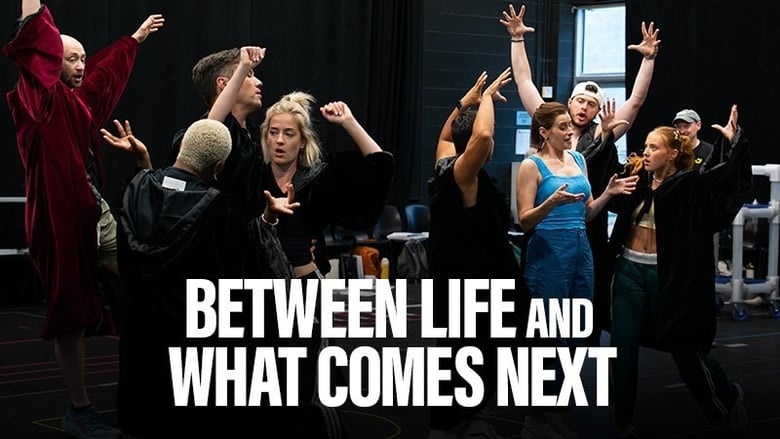
Photo credit: the cast of GRIM in dance rehearsals; photos by Samantha Laurent.

Comments are turned off
The author has disabled comments for this post